
Introduction: What to Know About Tractor Splitting Stands
Splitting a tractor sounds dramatic, but it's really about separating major sections, like disconnecting the engine from the transmission, to reach parts you can't service from outside. A tractor splitting stand supports both halves during that separation and keeps everything aligned when it's time to bolt the tractor back together.
Farmers and shop techs usually hit the same snags before they start. What does splitting actually involve? Will the stand fit your tractor? How do you keep several thousand pounds of steel from tipping, rolling, or drifting out of alignment? And is it smarter to buy a stand or send the job to a shop?
This guide covers stand design, compatibility, safety prep, and cost. It also explains how a splitting stand differs from dual-wheel equipment such as Bierman Inc's EZ Dual Changer.
Key Takeaways
- Tractor splitting separates major sections to reach the clutch, driveline, PTO, or transmission components.
- A stand must match your tractor's weight distribution, mounting points, and height range, not just its horsepower.
- Manufacturer service manuals, approved lifting points, level flooring, and trained help aren't optional.
- Splitting stands and dual-wheel changers solve different problems and aren't interchangeable equipment.
What Does Splitting a Tractor Mean?
"Splitting" a tractor means unbolting it at a major structural joint, usually between the front section (engine and clutch housing) and the rear section (transmission and rear end), so a technician can reach components buried inside. You can't pull a clutch disc or replace certain seals without separating these housings first.
Picture a John Deere 4430 rolled into the shop for clutch work. A technician can't reach the clutch through an access panel, so the tractor has to come apart at the bell-housing joint first.
Once the repair's finished, the sections roll back together and get rebolted. That split-and-rejoin cycle is exactly what a stand is built to support.
Common Reasons for a Split
Repair situations that often call for splitting include:
- Clutch replacement or adjustment
- Rear main seal or bell-housing seal repair
- PTO clutch or shaft service
- Certain transmission and driveline repairs
Whether your specific job requires a split, and exactly where the tractor separates, depends on the model. Confirm the procedure in your tractor's service manual before planning anything.
Splitting Stand vs. Other Shop Equipment
A splitting stand is easy to confuse with other shop tools; each does a different job:
- Tractor splitting stand – supports one section of a separated tractor and helps align it during reassembly
- Engine stand – holds a fully removed engine for bench work, not a tractor half
- Floor jack or bottle jack – lifts a load temporarily; not rated for sustained support
- Wheel dolly – moves a single wheel or tire assembly, not a tractor section
- Dual-tire changer – removes and mounts agricultural dual wheels, a separate task entirely
Grabbing the wrong tool is a common, costly mistake. A wheel dolly won't hold a transmission section steady, and a splitting stand won't help you swap a dual wheel.
How a Tractor Splitting Stand Works
A splitting stand holds one section of the tractor rock-steady while the other rolls away, then helps you roll it back into alignment later. The stand attaches to approved frame or bell-housing mounting points, not just any convenient surface.
Attachment and Support
Purpose-built stands typically use side mounting plates that bolt directly to holes already machined into the tractor's frame. K-Line's AT31000 system bolts to those frame holes at the tractor manufacturer's specified torque and doesn't require rails underneath the tractor, according to K-Line's product documentation.
Steiner's ABC5125 kit takes a different approach, using two independently wheeled stands that travel on steel rails instead.
Neither design is universal. Confirm your tractor's actual mounting-hole pattern, fastener size, and grade before assuming any plate will bolt up.

Key Construction Features
Look for these features when evaluating a stand:
- Telescoping or removable support legs for different tractor sizes
- Adjustable width and height to match your working area
- Locking pins that pass through the mounting holes, not just a cradle resting on top
- Stabilizing bars to resist tipping once a section is loaded
- Heavy-duty casters for repositioning a loaded section
Casters, Jacks, and Movement
Casters let you roll a supported tractor half out of the way, but caster capacity has to match the actual load, not the tractor's total weight. Worn wheels, cracked floors, or missing wheel locks turn a stable stand into a rolling hazard fast.
Height adjustment during realignment should come from the stand's rated jack or screw mechanism, never an improvised jack propped underneath. Manufacturer documentation shows working adjustment ranges roughly between 14.85 and 48.25 inches, though the exact figure depends on the specific support and attachment in use.
Matching Stand Size to Tractor Size
Support-leg length and configuration vary to accommodate everything from compact utility tractors to large row-crop machines. Some manufacturers document application ranges around 110 to 450 horsepower for large 2WD and front-wheel-assist tractors, while specifically excluding center-pivot articulated models. Other kits are built for wide-front tractors only.
Horsepower is a starting point, not a substitute for checking the stand's documented capacity and dimensional range against your specific tractor.
How to Choose the Right Tractor Splitting Stand
Before you buy, run through a checklist that covers load, fit, and stability, not just price.
Buyer's Checklist
- Rated capacity – Check the load rating on each individual support, not an assumed total. Brand figures like 10,000 vs. 20,000 pounds per support aren't interchangeable.
- Tractor weight and balance – Know how much weight each section will carry once separated.
- Mounting-hole pattern – Confirm bolt spacing, fastener grade, and size match your tractor's frame.
- Support height range – Verify the adjustment range covers your tractor's actual working height.
- Wheelbase or section dimensions – Make sure the stand's frame width accommodates your tractor's footprint.
- Manufacturer's approved applications – Check for stated exclusions, like articulated or center-pivot models.
"Universal" Doesn't Mean Automatic
Manufacturers often market mounting systems as universal, but that description doesn't replace verification. Before you buy, confirm:
- Bolt pattern and thread size match your tractor
- Fastener grade meets the manufacturer's torque specification (Grade 8 bolts with hardened washers, in many cases)
- Mounting-plate position clears hoses, wiring, and other components
- You'll still have access to the service area once the plates are attached
Fixed, Adjustable, and Modular Designs
| Stand Type | Best For | Trade-off |
|---|---|---|
| Fixed | Shops servicing one tractor size repeatedly | Limited flexibility for other models |
| Adjustable | Shops handling a range of tractor sizes | More setup steps per job |
| Modular | Shops needing interchangeable legs or supports | Higher parts count to track |
Mobility and Stability
Check mobility and stability details before you commit:
- Caster load rating matches your loaded section's weight
- Locking mechanisms on every caster
- Stabilizing bars plus a wide base
- Floor needs (flat, hard, level) match your shop
Don't buy until you've verified: a clearly stated capacity, a secure locking method, mounting hardware compatible with your tractor, and evidence the design suits your specific model. Skip any stand without a published capacity or compatibility list.
Safety and Preparation Before Splitting a Tractor
Your tractor's service manual, not general advice, should determine separation points, lifting locations, fluid handling, and electrical disconnection steps. Every model differs.
Preparation Steps
- Choose a level, load-rated floor and clear the work area of debris
- Secure the tractor: parking brake set, implements lowered, engine off, key removed
- Remove or support loose attachments before starting the split
- Gather rated lifting and blocking equipment, inspected and ready
- Plan how you'll move each separated section once it's free
Hazards to Address
Stored energy and unexpected movement cause most splitting injuries. Watch for:
- Stored hydraulic or spring energy in components you're disconnecting
- Rolling sections once separated from the rest of the tractor
- Falling components and pinch points around the joint
- Fluid spills, especially hydraulic fluid under pressure
- Insufficient overhead or side clearance for moving sections
OSHA's hazardous-energy standard requires that stored energy be isolated, relieved, or restrained before work begins, and verified before anyone reaches into the equipment. That principle applies directly to spring-loaded clutches and pressurized hydraulic lines on a tractor mid-split.

Before You Start
Inspect welds, tubing, pins, bolts, casters, mounting plates, and hydraulic components on the stand itself.
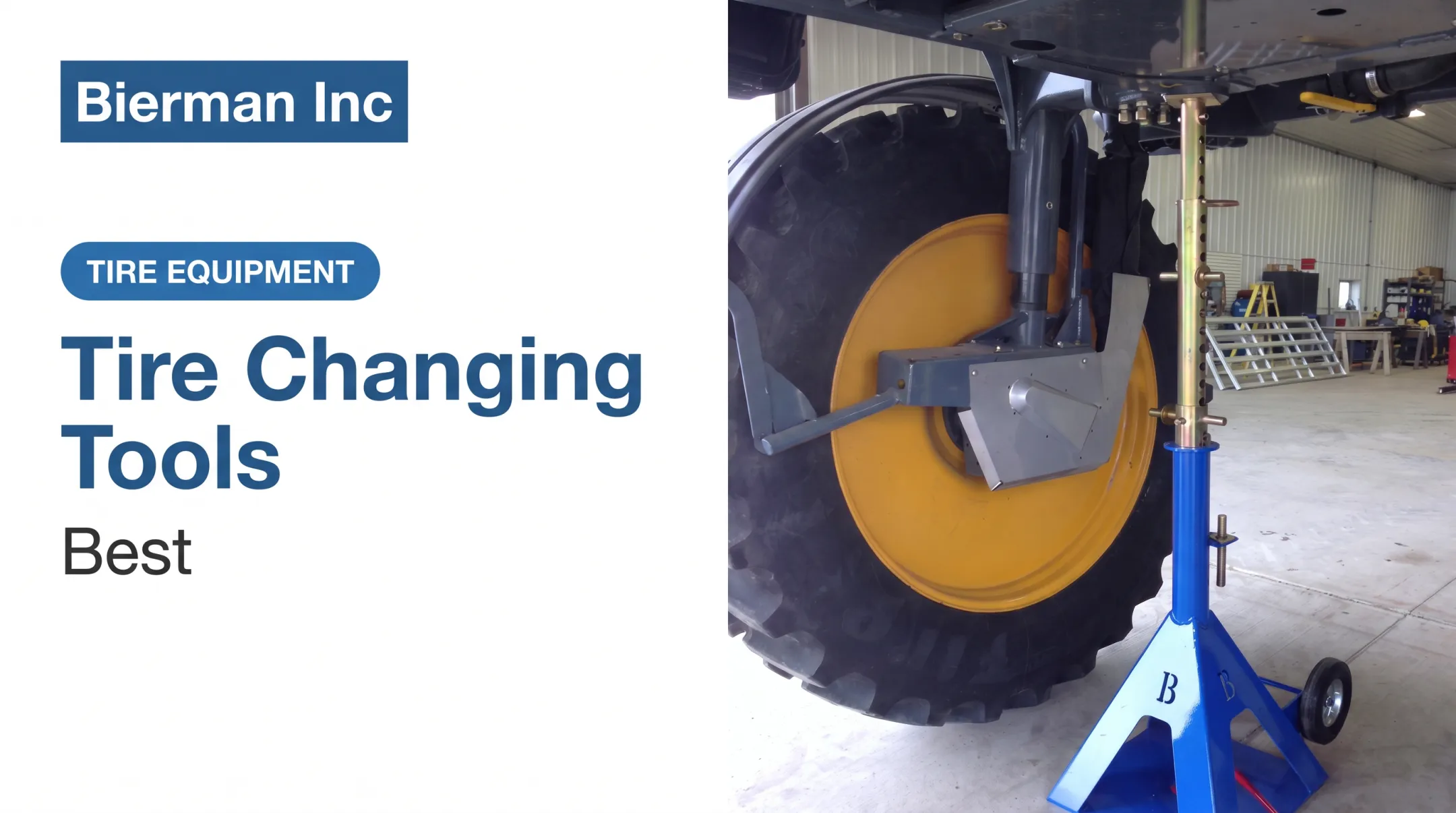
A quality pair of jack stands matters here too. Bierman's Model 325 heavy-duty jack stands carry a 25-ton capacity and adjust from 20 to 40 inches, giving techs a rated support option to pair with a splitting stand when needed.
Stop if any component is damaged, overloaded, or outside the manufacturer's instructions. Bring in a trained second set of hands. Splitting a tractor alone is how stable jobs turn into rolling hazards.
Buying Options and Cost Considerations
Most buyers choose among buying new, buying used, or paying a shop to handle the split. Renting or fabricating a stand can fit some shops, but cost and risk still hinge on the same factors below.
What Drives Total Cost
The stand itself is just one line item. Budget for:
- Compatible support legs or adapters for your tractor
- Shipping (splitting stands are heavy freight)
- Rated jacks if not included
- Fasteners matching your tractor's mounting holes
- Replacement casters over the equipment's life
- Inspection and any required service labor
New pricing varies widely by design. Recent manufacturer listings showed one stand priced near $1,700 on sale, while a larger multi-support system listed above $10,800.
These aren't comparable products. They're different support arrangements with different capacities, so match the price to the spec sheet, not the other way around.
Used Equipment Inspection Checklist
Before buying a used stand, check for:
- Cracks or bent tubing in the frame or legs
- Worn or elongated mounting holes
- Missing locking pins or hardware
- Damaged or seized casters
- Altered or amateur welds
- Unreadable capacity markings or missing instructions
A stand with unreadable ratings or missing hardware isn't a bargain. It's a liability.
When Professional Service Makes More Sense
Paying a shop can beat buying equipment when:
- You split tractors infrequently
- Shop space is limited
- Compatibility with your tractor is uncertain
- You don't have rated lifting equipment on hand
- The repair needs specialized diagnostics beyond the split itself
For labor-only comparison, one dealer estimate puts a complete clutch replacement at $75 to $150 per hour and 4 to 12 hours of labor, roughly $300 to $1,800. Splitting some tractors adds hours to that total.

That figure covers the whole clutch job, not splitting alone, so request a model-specific written estimate either way.
If You're Actually Changing Wheels, Not Splitting
If your real need is removing or maneuvering agricultural dual wheels rather than separating tractor sections, you're shopping for different equipment.
Bierman Inc's EZ Dual Changer handles tires up to 32 inches wide with a 3,000-pound lift capacity. It changes duals in about five minutes and hangs from a chain hoist, loader, forklift, or service-truck boom. It's a wheel-handling tool, not a substitute for a splitting stand.
Frequently Asked Questions
How much does it cost to split a tractor?
Cost depends on labor rates, tractor size, repair scope, location, and whether you already own rated equipment. Compare a shop's written estimate against the cost of a properly rated stand plus accessories before deciding.
What does splitting a tractor mean?
Splitting means separating major tractor sections, like the engine from the transmission, to access internal components such as the clutch, driveline, or certain seals you can't reach from outside.
Where can I find a used tractor splitting stand for sale?
Check agricultural equipment dealers, repair-equipment suppliers, farm-equipment marketplaces, and auction listings. Inspect capacity markings, condition, mounting compatibility, and missing hardware before you buy.
What size tractor splitting stand do I need?
Sizing depends on your tractor's supported-section weight, mounting-point locations, dimensions, and required height range, not horsepower alone. Match those specs to the stand's documented capacity.
Can I build my own tractor splitting stand?
Fabrication requires verified load calculations, suitable materials and welds, secure mounting, and stability testing. A purpose-built, rated stand is often the safer, more predictable option.