
Many farmers, dealers, and contractors run into the same problem: choosing between a wheel crib, a wheel stand, a jack, or a dual-tire changer without understanding where one tool's job ends and another's begins. Pick the wrong equipment, or exceed its rated capacity, and you're gambling with your hands, your back, and your equipment.
This guide breaks down what wheel cribs and stands actually do, where they fit into agricultural and industrial wheel service, how to choose equipment that matches your task, and the safety practices that keep a routine dual change from becoming a serious incident.
Key Takeaways
- Use cribs and stands to support or stabilize assemblies—not as substitutes for jacks or tire changers
- Match verified capacity and size to the full wheel-and-tire assembly, not equipment looks
- Controlled movement and manufacturer instructions beat improvised wood blocks every time
- Purpose-built gear cuts dual-wheel service strain and improves repeatability
Wheel Cribs and Wheel Stands: What They Do
"Crib" and "stand" get used loosely in the ag equipment world, but they describe different functions. A wheel crib is a support structure built to hold or stabilize a wheel or wheel assembly for a specific task. A wheel stand can stabilize a wheel as well, and often helps position, store, or maneuver it. The actual design, capacity, and approved use vary by manufacturer, so you need to check the product documentation rather than assume.
How These Differ From a Jack or Tire Changer
Separate the jobs by what each tool is actually supporting:
| Equipment | What It Does | What It Doesn't Do |
|---|---|---|
| Jack or lift | Raises the machine so service can happen | Doesn't provide stable long-term support on its own |
| Crib or stand | Supports or positions a wheel/assembly during or after lifting | Isn't necessarily rated to raise anything |
| Dual-tire changer | Removes, transports, and installs a dual wheel | May not support the machine itself |
The Tire Industry Association's farm-tire training material makes this distinction directly. Cribbing and jack stands support the machine during service, while a separate tire-changing stand is built around the wheel and tire. Confusing the two is a common and avoidable mistake.
Why Purpose-Built Equipment Matters
Capacity numbers aren't universal, either. Industrial crib-block manufacturers publish working-load limits for specific models, but those figures apply to the exact block and loading arrangement tested. Turtle Plastics notes that point loading and uneven weight distribution can reduce a block's effective capacity, even when the block itself is rated for tens of thousands of pounds. A rating for one product doesn't transfer to another.
Purpose-built wheel-handling gear closes that gap. A design built specifically for agricultural dual-tire changes gives you:
- More controlled positioning while lining up mounting hardware
- Easier access to lug nuts without fighting an unstable wheel
- Less reliance on scrap lumber or improvised blocking
- Better repeatability when you're doing the same task over and over
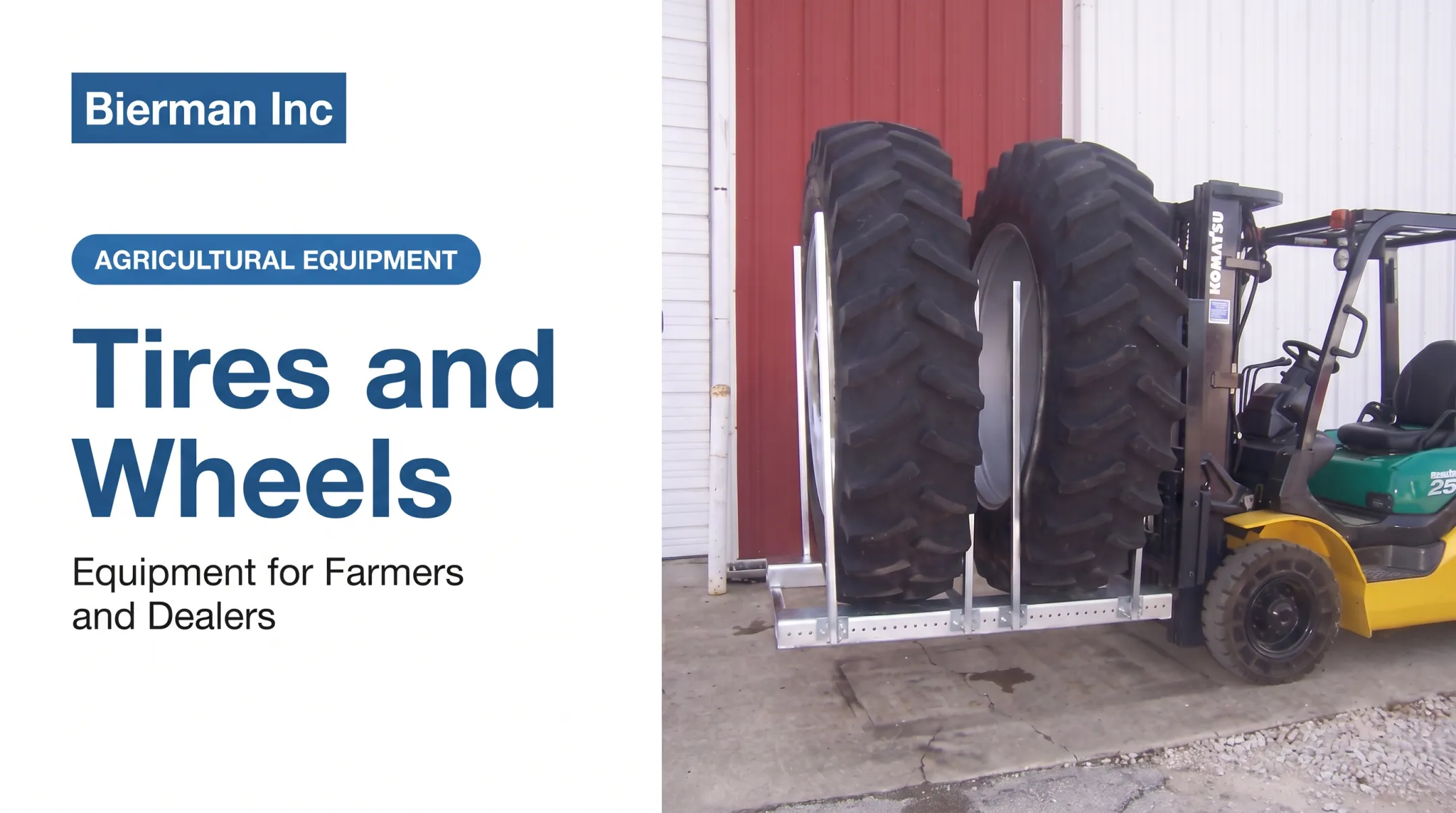
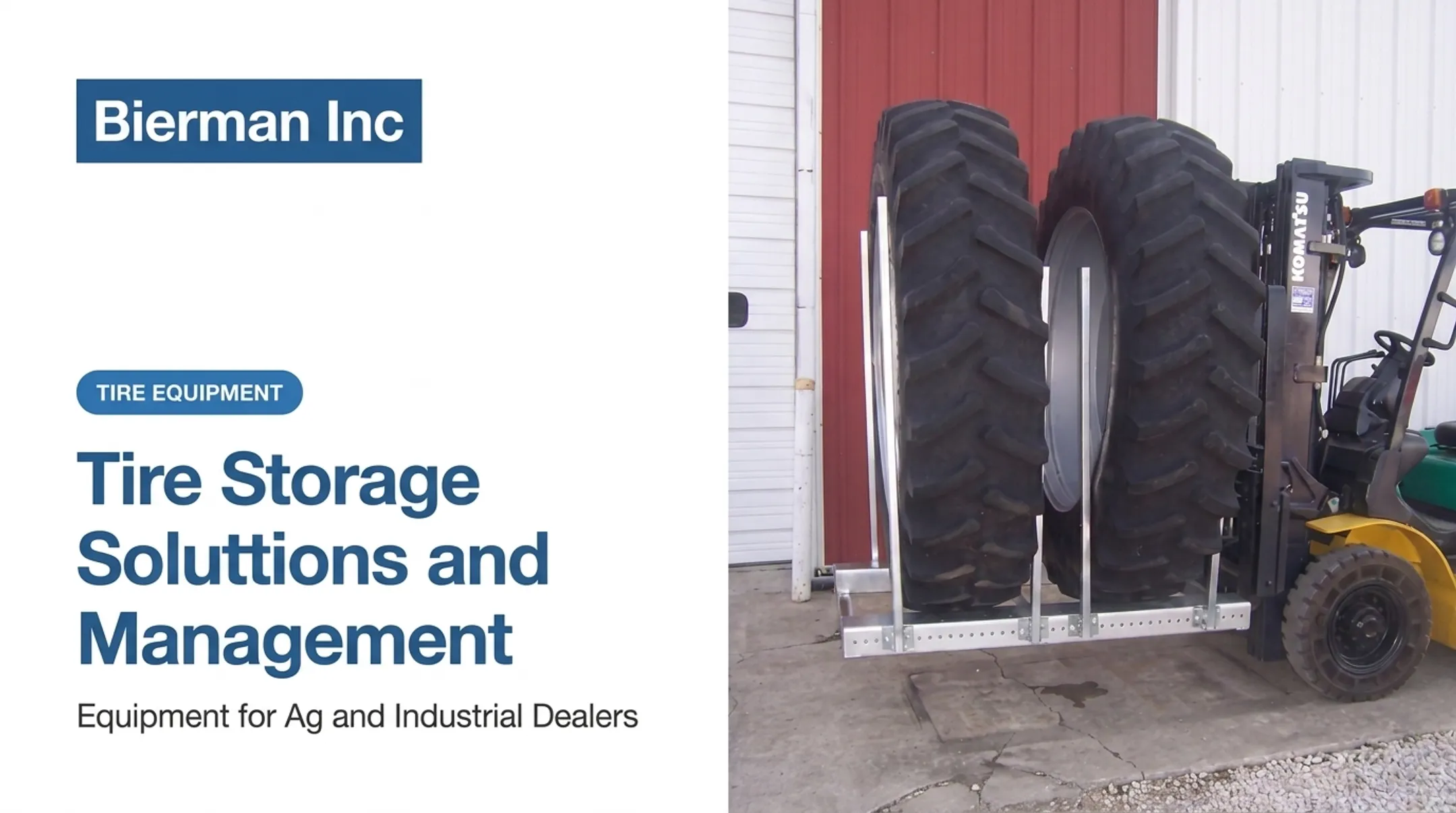
Bierman Inc's EZ Dual Changer is one example of equipment built around this exact problem. It holds the tire securely and rotates it on wheels and rollers to help align lug nuts. The design supports one-person dual-tire changes, so you aren't relying on a second set of hands to muscle the wheel into place.
Common Applications in Agriculture and Industry
Wheel cribs, stands, and related handling gear show up anywhere a large wheel needs secure support, storage, or safe removal from a machine. The setup changes depending on who's doing the work.
Seasonal Tractor Duals
Row-crop farmers who swap dual configurations between field conditions deal with removal, positioning, alignment, and reinstallation, often more than once a season. Equipment that handles the lifting and rotating cuts down on the manual wrestling match that normally comes with this job.
Dealer Service Bays
Implement dealers face a different version of the same problem: repeated dual-tire work across tractors and implements of wildly different sizes. A dealer workflow might look like this:
- Customer brings in a tractor for a dual configuration change.
- Technician raises the machine on an appropriately rated jack or stand.
- Outer dual comes off using a dual-tire changer rated for the wheel's width and weight.
- New or repositioned wheel goes on, with the changer assisting lug-nut alignment.
- Removed wheel goes to a storage rack rather than sitting on the shop floor.
Contractors, Custom Operators, and Storage Needs
Custom operators and contractors moving between jobs often need equipment that travels well, not just equipment that works in a fixed shop. Portability and quick setup matter as much as raw capacity here.
Storage is its own category. A tire safety rack, for instance, keeps dual wheels upright and accessible between jobs, and some can be moved with a forklift or front-end loader forks. That's useful for staging, but it's not a substitute for a rated lifting or securing system during actual service work.
One more wrinkle: wheel weights. Removing them before service adds time and labor, and not every piece of equipment is built to work around them.
One customer, Jeff from Waskada, Manitoba, reported that his equipment handled 800-metric tires with 1,500-pound wheel weights still attached, saving him time and labor. Results like that depend on the specific equipment's design, so confirm compatibility before assuming your setup can do the same.

How to Choose the Right Wheel-Handling Equipment
Start with the numbers, not the catalog photo.
Know Your Complete Load
Before comparing products, account for total weight and the physical size of the assembly:
- The wheel and tire themselves
- Liquid ballast, if the tire is filled
- Wheel weights, if they're staying on during service
- Dual configuration width and diameter
- The single heaviest assembly you expect to handle, not the average
Confirm Capacity and Compatibility
Once you know your load, check the manufacturer's documentation for:
- Rated capacity for the exact configuration you'll use
- Contact points and how the load is distributed
- Wheel-size range and maximum width
- Approved surfaces for setup
A thicker-looking stand isn't automatically stronger. Capacity depends on materials, engineering, and testing, not visual bulk. A product's ability to hold a smaller wheel doesn't tell you anything about how it performs at your actual weight.
Match Equipment to Your Workload
Think about how often you'll use the equipment and where:
- Occasional farm use — prioritize straightforward setup and capacity matched to your specific tractor configuration
- High-volume dealer service — prioritize durability, adjustability across wheel sizes, and workflow speed
- Contractor or custom operator work — prioritize portability and fast setup between jobs
Also weigh storage footprint and access to lugs and mounting hardware. A stand that's hard to maneuver into position defeats the point of purpose-built equipment.
Skip the Improvised Supports
A stack of wood blocks might look stable, but it hasn't been tested to any load rating, and its geometry changes every time you rebuild it. Purpose-built equipment is engineered for consistent geometry and documented capacity. That consistency is worth more than the cost difference over the life of the equipment.

Once capacity, fit, and workload are clear, compare purpose-built options against your heaviest real-world assembly.
If you're ready to compare options, Bierman Inc's lineup of wheel cribs, stands, and related wheel-handling equipment covers agricultural, industrial, truck, and contractor applications. Call 712.324.1930 or email sbierman@biermansales.com to confirm specifications against your exact wheel assembly before ordering.
Using Wheel Cribs and Stands Safely
Good equipment doesn't eliminate risk by itself. How you set it up and use it matters just as much.
Before You Start
Inspect the equipment every time, not just when something looks obviously wrong:
- Check for cracks, distortion, or corrosion
- Confirm hardware is tight and nothing's missing
- Verify capacity labels are still legible
- Pull the current manufacturer instructions if you haven't reviewed them recently
Setting Up
Place the equipment on a firm, level surface rated for the load. Keep the wheel centered and fully supported, and block it against unintended rolling using approved methods, not whatever's lying around the shop.
Keep hands, feet, and bystanders clear of crush zones and pinch points. Never position any part of your body beneath an unsupported assembly, even for a second.
Operational Limits
A few rules that shouldn't be negotiable:
- Never exceed the rated capacity, even if the load "looks" close enough
- Skip unapproved stacking when you need extra height
- Leave the equipment unmodified for jobs it wasn't designed for
- Use a support as a lifting device only when it is rated for that work
- Treat transport restraint as off-limits unless the manufacturer approves that specific use
Know the Regulatory Boundaries
For general-industry work, OSHA's 29 CFR 1910.177 covers servicing multi-piece and single-piece rim wheels on large vehicles, including training requirements and inflation restraints. The same standard explicitly excludes workplaces regulated under OSHA's separate agriculture standards.
Don't assume 1910.177 applies automatically to every farm operation. Check which rules cover your situation, and don't label equipment "OSHA-compliant" unless the manufacturer's documentation backs that up.

When to Stop
Stop if any of these show up:
- The assembly feels unstable
- The equipment is visibly damaged
- The load exceeds your documented capacity range
- Liquid ballast hasn't been factored into the weight
Bring in qualified service personnel or equipment rated for that specific load rather than pushing forward.
Frequently Asked Questions
What is a wheel crib used for?
A wheel crib supports or stabilizes a wheel assembly during service, storage, or handling. Always verify its capacity, dimensions, and intended use in the manufacturer's documentation before relying on it.
What is the difference between a wheel crib and a wheel stand?
Terminology varies by manufacturer. Cribs generally refer to support structures, while stands may add positioning, storage, or maneuvering functions on top of basic support.
Are wheel cribs safe for agricultural tires?
Safety depends on the specific design, rated capacity, wheel compatibility, and correct setup. Don't assume an automotive crib or an improvised support can handle an agricultural wheel's weight and dimensions.
How do I choose the right wheel-handling equipment?
Account for total assembly weight, wheel dimensions, dual configuration, and how often you'll use the equipment. Then confirm the manufacturer's published capacity and application limits match your needs.
Can one person change tractor dual tires?
Some purpose-built systems, like the EZ Dual Changer, are designed to support one-person dual-tire changes. You'll still need compatible equipment, proper training, and adherence to the product's stated limits.
What should I check before using a wheel crib or stand?
Check for damage, confirm rated capacity matches your load, and verify wheel compatibility. Set up on a level surface with proper blocking, keep people clear of pinch points, and never position anyone beneath an unsupported wheel.