
Introduction
Every farm moves something heavy, all day, every day. Pallets of seed and fertilizer, bins of harvested produce, bales of hay, sacks of feed, crates for market — and eventually, a 500-pound tractor wheel that needs to come off before planting season starts.
Relying on manual labor or a tractor bucket wastes time and raises injury risk when loads hit several hundred pounds. Many operators struggle with moving palletized supplies efficiently, controlling bulk grain and feed without contamination, and handling heavy wheels safely when tires need changing.
This guide covers the main categories of agricultural material handling equipment, how each fits real farm workflows, key buying factors, and one specialized category operators often overlook: equipment built to remove, lift, and rotate large agricultural wheels.
Key Takeaways
- Agricultural material handling covers storage, industrial trucks, bulk systems, conveyors, and automation.
- Select equipment by material, load weight, terrain, lift height, and use frequency, not brand.
- Mechanization lowers strain only when capacity, inspections, and operator training match the job.
- Tractor, implement, and truck wheels need purpose-built handlers, not general forklifts.
Types of Agricultural Material Handling Equipment
Agricultural material handling equipment covers the tools, machines, vehicles, and systems used to move, position, store, protect, or process farm inputs, outputs, and components — from a bag of seed to a 2,000-pound wheel assembly.
Storage and Handling Equipment
Pallets, racks, shelving, bins, drawers, carts, tire safety racks, and stacking systems keep seed, fertilizer, feed, parts, tires, and packaged goods organized. Strong storage setups typically:
- Maximize floor and vertical space in barns and shops
- Keep frequently used materials visible and quick to retrieve
- Protect tires, parts, and bagged inputs from damage and clutter
A well-organized parts room with labeled bins saves more time over a season than most operators expect, especially during planting or harvest crunches.
Industrial Trucks and Lifting Machines
Forklifts, pallet jacks, telehandlers, hand trucks, platform trucks, walkie stackers, and wheel dollies each fill a different role. A telehandler with an agricultural boom and four-wheel-drive tires handles rough ground and reaches heights a warehouse forklift never could.
Wheel dollies and industrial wheel movers let one person position heavy dual assemblies in shop space too tight for a forklift.
When selecting this equipment, evaluate:
- Tire configuration — pneumatic for mud and gravel, solid for concrete
- Ground clearance and turning radius — sized for barns and field lanes
- Load capacity and attachments — forks, buckets, clamps, or wheel-handling gear
- Indoor versus outdoor rating — some units aren't built for both
Bulk-Material Handling Equipment
Conveyors, hoppers, bucket or grain elevators, augers, and silos move loose materials — grain, feed, seed, fertilizer — without repeated manual scooping. These systems support loading, unloading, elevating, storing, and metering while limiting product damage from excess handling.

OSHA's farmstead equipment standard sets guarding requirements for conveying, feed, and sweep augers, reflecting how common these systems are in daily farm work.
Engineered and Automated Systems
Automated conveyors, sortation systems, palletizers, and robotic handling show up more in processing plants, packing houses, and high-throughput dealerships than on an individual farm. A Washington apple packer, for example, installed robotic palletizing cells to handle packed cases at volume. That setup fits large-scale processing, not a typical 500-acre grain operation.
How Material Handling Equipment Supports Farm Operations
From receiving supplies to shipping finished product, handling equipment touches every stage of the farm workflow.
Crop Production, Harvest, and Produce Handling
Forklifts, carts, conveyors, bins, and pallet systems move crates, boxed produce, seed, and fertilizer between fields, packing areas, and storage.
USDA's Economic Research Service documented a Washington apple operation that deployed 62 harvest platforms in a single day ahead of a forecast freeze, with crews sharing harvest bins to keep picking moving. The case shows how mechanized handling reshapes workflow. It does not prove a fixed percentage gain in every operation.
Grain, Feed, and Bulk-Material Operations
Hoppers, augers, conveyors, grain elevators, and silos support controlled movement of loose material while cutting down on repeated loading. Beyond moving grain, quality control matters just as much:
- Monitor stored-grain temperature and moisture as outside conditions shift
- Match equipment to material characteristics like dust and moisture sensitivity
- Limit contamination through separation practices, especially in feed production
Livestock and Dairy Operations
Forklifts, telehandlers, carts, and lifting attachments handle hay bales, feed, bedding, and supplies in barns and feed storage areas. Skid loaders and feed-mixing wagons see heavy seasonal use, particularly in winter dairy work, when wet floors and ice make equipment paths more hazardous.
Confined spaces, uneven barn floors, and animal movement all demand extra attention:
- Keep loads low and travel straight up or down slopes, not across them
- Inspect backup cameras and mirrors before operating near people or livestock
- Treat manure pits as their own hazard category, separate from general loader work
Agricultural Dealerships, Custom Operators, and Contractors
A farm owner, a dealer, and a custom contractor each have different priorities:
| Priority | Farm Owner | Implement Dealer | Custom Operator |
|---|---|---|---|
| Utilization | Seasonal, tied to crop calendar | Year-round, varies by service demand | Peak-season, tight turnaround |
| Mobility | Fixed farmstead | Shop-based | Must travel between jobs |
| Equipment needs | Multi-purpose | Varied tire/wheel sizes | Fast, portable solutions |
Dealers especially need equipment flexible enough to handle seasonal tire changes and parts movement without dedicating a bay to a single task.
Efficiency, Safety, and Product Protection Benefits
Suitable handling equipment reduces unnecessary travel, physical strain, and product damage. Farm work studies show high physical strain from manual lifting and carrying, which is why farms and shops use mechanized handling when the job allows it.
That said, benefits come with trade-offs:
- Capital cost and ongoing maintenance
- Operator training requirements
- Fuel, power, or hydraulic fluid needs
- Space requirements for storage and maneuvering
- Risk of oversizing equipment for the actual task
How to Choose Equipment for an Agricultural Operation
Start with the task and the material before you open any equipment catalog.
Material Characteristics and Load Requirements
Document what you're actually moving:
- Loose versus palletized materials
- Weight, dimensions, and shape
- Fragility, moisture sensitivity, or contamination risk
- How often the material moves
Those details point you toward forks, buckets, clamps, rotators, conveyors, or specialized attachments.
Operating Environment and Terrain
Indoor aisle width and barn clearance differ sharply from outdoor mud, gravel, or winter ice. Before buying, confirm:
- Tire type and traction for your actual ground conditions
- Turning radius against your tightest doorway or gate
- Weather protection and operator visibility for outdoor work
- Slope handling, since traveling across a grade is riskier than straight up or down
Capacity, Reach, and Workflow
Confirm rated capacity, lift height, and reach against your heaviest or most awkward regular load, not the average one. Then map the movement route from receiving to storage to shipping. This exposes bottlenecks and points where people, vehicles, and materials cross paths unnecessarily.

Ownership, Seasonal Utilization, and Support
Purchasing, leasing, and custom hire all carry different cost structures depending on how many hours a machine actually works each year:
- Purchase: ownership cost per hour drops with higher annual use; low use drives it up
- Lease or rent: compare payment terms against expected seasonal windows and overage charges
- Custom hire: access to specialized equipment without ownership, but availability during peak season isn't guaranteed
Also check parts availability, dealer support, warranty terms, and whether the equipment fits future changes in your operation.
Safety and Maintenance Requirements
OSHA has clarified that its general-industry powered industrial truck standard, 29 CFR 1910.178, does not apply to agricultural operations covered under Part 1928. Farmstead equipment instead falls under separate guarding and servicing provisions. Regardless of which standard applies, sound practice includes:
- Pre-use inspections and rated load limits
- Secured loads and clear travel paths
- Pedestrian separation and defined parking procedures
- Documented maintenance for tires, hydraulics, brakes, and guarding
Specialized Wheel-Handling Equipment for Agricultural Applications
Material handling on a farm isn't only about moving product. Large tractor, implement, truck, and industrial wheels need their own handling category, separate from forklifts and conveyors.
Large farm tire-and-wheel combinations can weigh more than 2,000 pounds, and crews who improvise with loaders or forklifts face real positioning hazards.
Row-crop farmers changing duals seasonally, implement dealers running a service bay, and custom operators swapping wheels between jobs all face this problem differently than a produce packer or grain handler does.
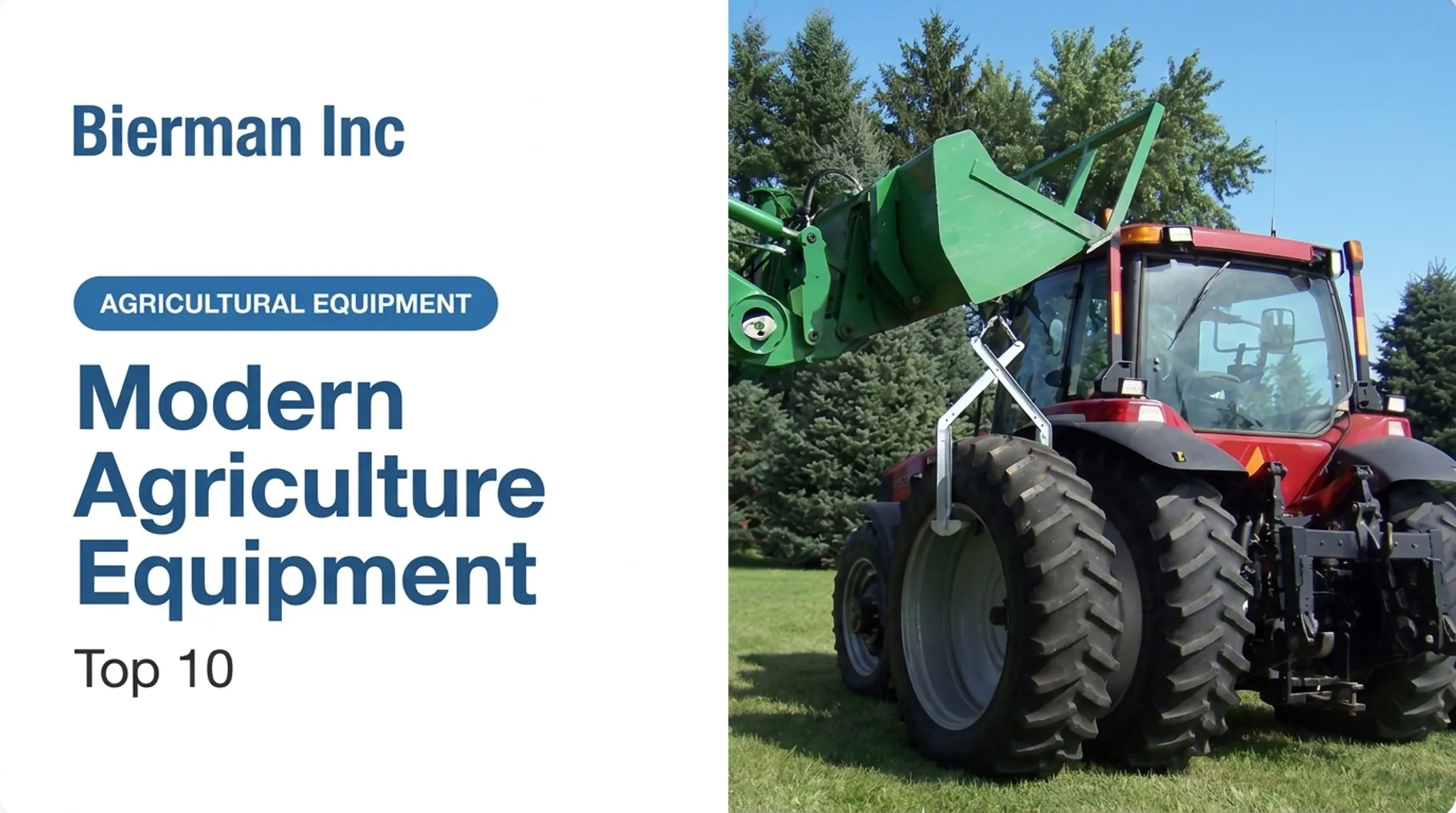
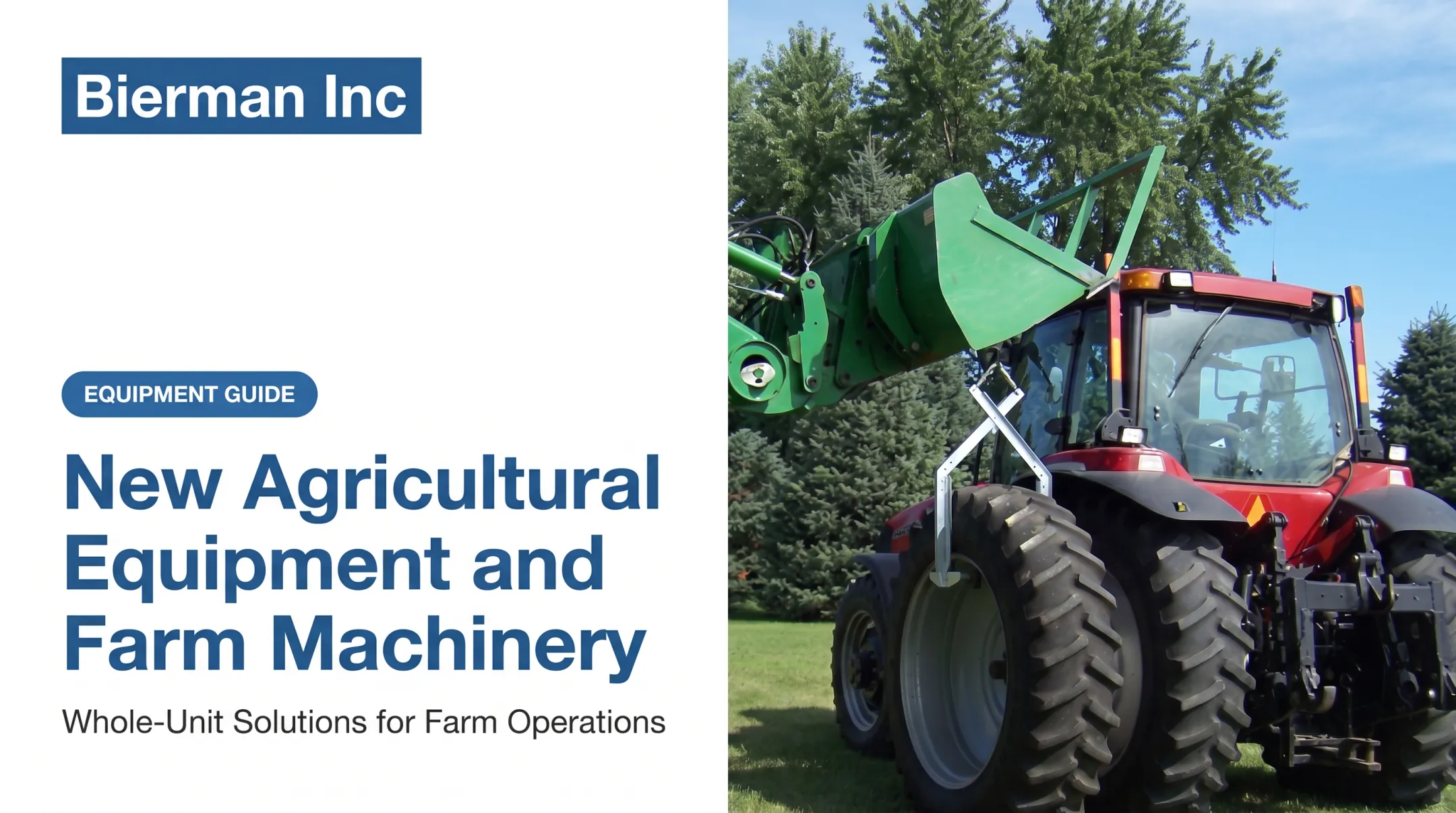
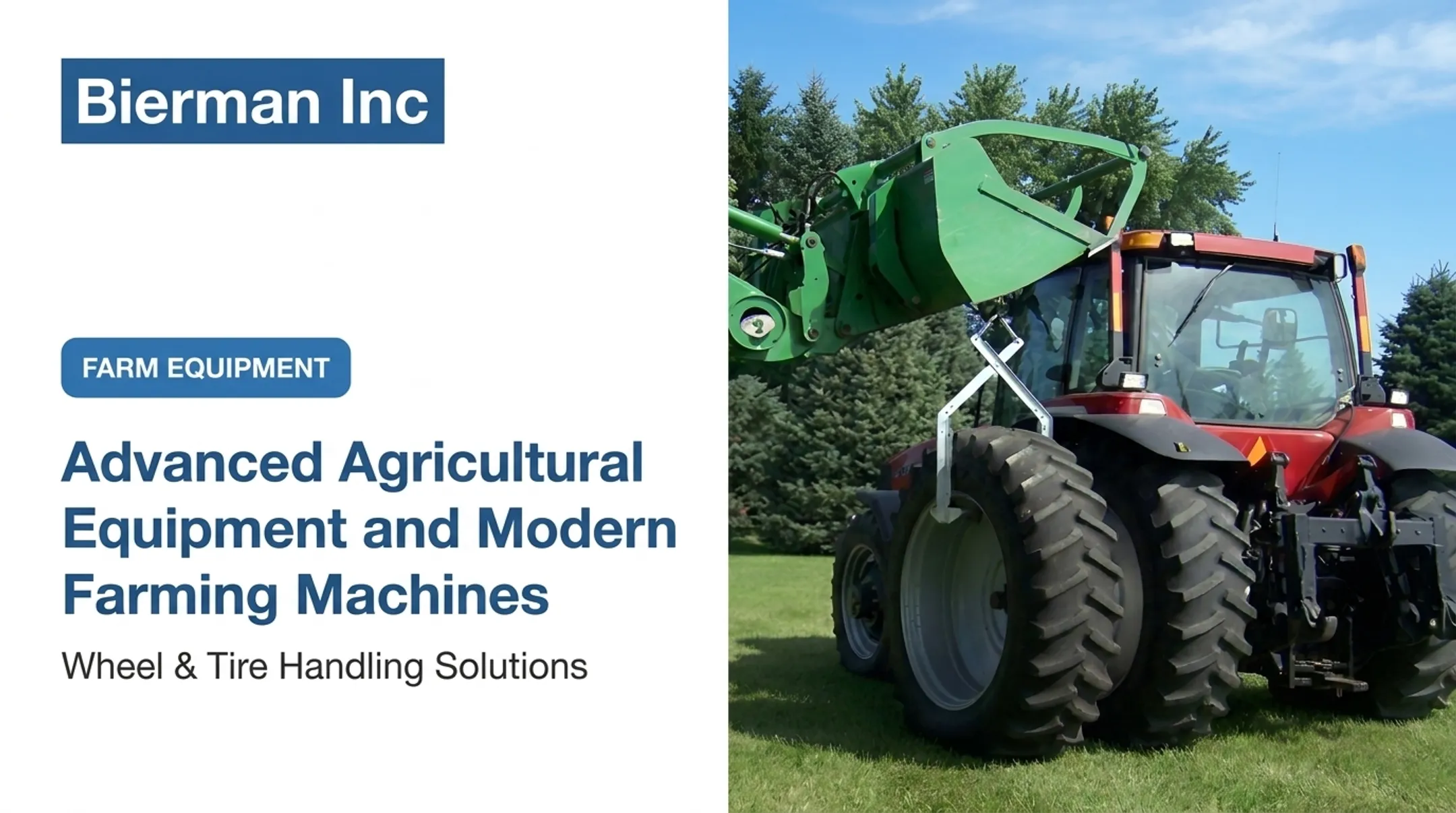
Bierman Inc, based in Marcus, Iowa, builds equipment specifically for this gap:
- EZ Dual Changer — Patented (No. 9,695,020); handles tires up to 32 inches wide and 3,000 pounds; mounts on a chain hoist, loader, forklift, or service-truck boom and rotates for lug-nut alignment
- Large Wheel Dolly and Industrial Wheel Mover — Cover 36- to 90-inch diameters and up to 4,000 pounds, with forklift, loader, or skid-loader quick-attach
- Tire Safety Rack — Supports upright dual-tire storage; moves with forklift or loader-mounted pallet forks
- High Clearance Sprayer Jack and Heavy Duty Jack Stands — Lift sprayers and large ag equipment during service
A CNH Service Training Center technician has reported frequent seasonal use of the EZ Dual Changer on combine tires. Specs vary by model, so confirm fitment before buying—call Bierman Inc at 712.324.1930 to match a configuration to your tire sizes and equipment.

Frequently Asked Questions
What types of equipment are used for material handling in agriculture?
Farms use storage systems, forklifts, pallet jacks, telehandlers, conveyors, hoppers, grain elevators, silos, carts, bins, and specialized wheel-handling equipment. The right mix depends on what materials move through the operation and how often.
What is the most common material handling equipment used on a farm?
Forklifts, pallet equipment, telehandlers, carts, conveyors, and bins are the most widely used categories. The best choice still depends on your materials, terrain, scale, and workflow.
How does material handling equipment improve agricultural safety?
Mechanized lifting and movement reduce manual handling and physical strain compared to lifting by hand. That said, safety still depends on training, inspections, rated capacities, and load stability, not the equipment alone.
How do I choose the right material handling equipment for my farm?
Start with load characteristics, capacity, and lifting height. Then weigh terrain, space, usage frequency, maintenance support, and total ownership cost.
What equipment is used to move bulk materials such as grain and feed?
Conveyors, augers, hoppers, bucket or grain elevators, bins, and silos handle bulk grain and feed movement. Match the system to material flow, storage needs, and contamination or moisture control requirements.
What equipment can help with agricultural dual-tire changes?
Purpose-built wheel-handling equipment supports safer, easier dual-tire changes than improvising with a loader or forklift. Bierman Inc's EZ Dual Changer is one example, designed to lift and rotate dual wheels for one-person operation.