
Introduction
Tossing tires in a corner isn't storage. It's a liability waiting to happen.
The right approach protects tire condition, preserves usable space, and makes retrieval safer and faster. Get it wrong, and you're looking at cracked sidewalls, wasted floor space, or a wheel assembly that takes three people to move because nobody labeled where it belonged.
Farmers, implement dealers, tire service centers, and contractors all face different versions of the same problem:
- Seasonal inventory swings that overrun limited shop or shed space
- Heavy mounted wheels that are tough to lift, move, and identify
- Damage risk from improper stacking or unstable racks
- Retrieval delays when nothing's labeled
This guide covers preparing tires correctly, choosing storage equipment that fits your operation, building a repeatable inventory process, and handling oversized wheels without turning routine retrieval into a workplace injury risk.
Key Takeaways
- Store tires in a clean, cool, dry, shaded space away from ozone sources and chemicals.
- Confirm storage limits and stacking rules with your tire manufacturer.
- Match racks, shelves, mobile systems, or carousels to tire size, volume, and retrieval speed.
- Label and inspect every tire so staff can ID size, position, and condition without rehandling.
- Treat agricultural dual wheels as a handling and safety job that needs the right equipment.
Tire Storage Fundamentals
Why Storage Conditions Matter
Rubber degrades from exposure, not just age. Sunlight, heat, moisture, ozone, and petroleum products all accelerate deterioration.
The U.S. Tire Manufacturers Association recommends clean, dry, well-ventilated indoor storage with mild temperatures and shade. Keep tires away from direct sun and ozone-producing equipment like electric motors, battery chargers, and welders. Elevating tires on a pallet or rack also limits moisture exposure.
If you're storing tires outdoors as a fallback, raise them off the ground and cover them with an opaque, vented, waterproof cover. An unvented cover traps heat and humidity, which does more harm than good.

Preparation Checklist Before Storage
Don't skip prep just because a tire is going into a rack for a few months:
- Clean off dirt and brake dust — buildup traps moisture against the rubber.
- Rinse and dry thoroughly — leftover moisture invites damage once the tire is shelved.
- Skip unapproved tire dressings — some contain solvents that speed up cracking.
- Check for visible damage — cuts, bulges, or uneven wear before it goes into storage.
- Record location and condition — write it down now, not when someone's hunting for it later.
Mounted vs. Unmounted Storage
A mounted assembly weighs significantly more than a bare tire and behaves differently in a rack. An 18.4-inch × 46-inch agricultural dual, for example, weighs roughly 840 pounds once mounted — nowhere near what one person should be lifting or stacking manually.
Orientation depends on how the tire is stored:
- Unmounted (Michelin, passenger guidance): Stand tires upright
- Mounted assemblies: Hang by the rim or stack horizontally
- Unmounted (Goodyear dealer guidance): Horizontal stacking or sidewall-to-sidewall racking is acceptable; avoid overstacking that crushes the bottom tires
There's no single correct orientation for every tire. It depends on whether it's mounted, its size, and how long it'll sit.
How Long Is Too Long?
Calendar age alone doesn't tell you if a tire's still safe. USTMA is explicit: conditions and inspection matter more than a universal expiration date. Check the DOT date code, and have a tire professional inspect anything that's been sitting a while before it goes back into service.
Choosing Tire Storage Solutions
Start With a Needs Assessment
Before buying racks, answer these questions:
- How many tires or wheel assemblies are you storing at peak season?
- What are the dimensions and weight — mounted or unmounted?
- How much floor and vertical space do you actually have?
- How often does inventory move (daily retrieval vs. seasonal storage)?
- Do forklifts or loaders need clear paths through the space?
Options for Smaller Operations
Low-volume setups don't need industrial infrastructure:
- Freestanding tire shelves: Good for seasonal customer sets; positions tires on the tread for easy scanning.
- Wall-mounted racks: Free floor space entirely. Anchor to the wall material—most units ship without anchors.
- Purpose-built floor racks: Simple, stable, and easy to organize by size or customer.
Commercial and High-Volume Systems
Dealerships and larger operations need density and speed:
| System | Best For | Key Consideration |
|---|---|---|
| Modular/stacking racks | Retail inventory, mixed sizes | Rated load capacity must match tire weight |
| Mobile racks | Frequent rearranging | Wheel locks needed on uneven floors |
| Multi-tier shelving | High-volume, uniform sizes | Requires floor and wall anchoring |
| Tire carousels | Space-constrained shops | Some models hold up to 352 passenger tires in a compact footprint |
| Laced/portable racks | Passenger and light-truck tires | Folds flat when empty, useful for seasonal storage |
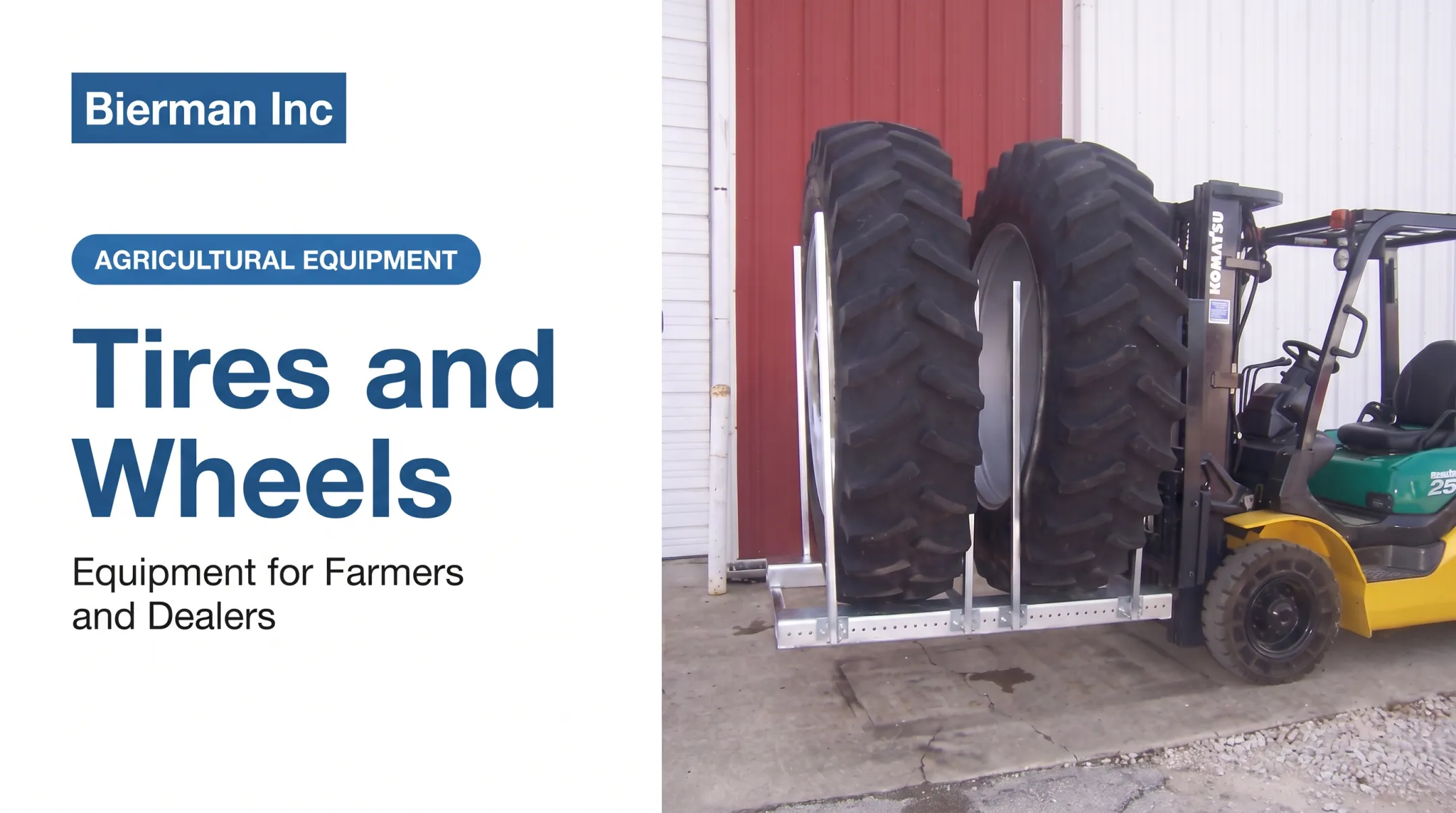
Agricultural dual wheels need a different setup than passenger-tire shelving. A Tire Safety Rack built for upright storage is sized for dual assemblies, with side-adjustable uprights that fold down for loading.
You can reposition it with forklift or front-end loader forks, so nobody has to drag an 800-pound wheel across the shop floor.
Matching Solutions to Common Situations
- Seasonal customer tires: Labeled shelving or wall racks with a clear customer-ID system.
- Mixed tire sizes: Adjustable modular racks over fixed-slot shelving.
- Large quantities of identical tires: Stacking racks or a carousel for density.
- Agricultural wheels: A rack rated for the assembly weight, like the Tire Safety Rack, paired with proper lifting equipment.
- Limited floor area: Wall-mounted or vertical carousel systems over floor racks.
Building a Tire Storage and Management Process
Receiving and Recording
Every tire entering inventory needs a record before it hits the rack:
- Tire size, brand, and product type
- DOT date code (where applicable)
- Customer or ownership ID
- Mounted status
- Storage location
- Visible condition at intake
Label Everything, Every Time
A consistent labeling system (rack, bay, shelf, position) helps staff find the right tire without moving three others first. For seasonal sets, mark which vehicle or wheel position each tire came from so it returns to the same spot.
Rotate by Age, Not Convenience
USTMA's stock-rotation guidance is straightforward: use the tires held longest first. Build periodic audits into your process to catch:
- Aging or damaged stock
- Unclaimed customer tires
- Misplaced inventory
- Obsolete sizes taking up rack space
Connect Physical Storage to Digital Tracking
A spreadsheet works for small operations. Larger shops benefit from management software that logs movement, condition, and service history automatically. Some platforms support barcode scanning for real-time bin updates from a phone, with fewer paperwork errors.

Retrieval Without the Runaround
- Confirm the recorded location before sending someone to grab a tire.
- Use rated carts or lifting equipment for anything mounted or oversized.
- Verify the tire matches the request at pickup — size, DOT code, customer ID.
- Update the record immediately after it moves.
What to Track Over Time
Watch for patterns that signal a process problem:
- Retrieval time creeping up
- Repeat handling of the same tire (a sign of poor initial placement)
- Damage incidents during storage or moves
- Unused capacity sitting idle during off-peak months
Safe Handling and Heavy-Wheel Considerations
The Real Hazards
Tire storage injuries rarely come from the tire itself. They come from:
- Unstable stacks that shift or collapse
- Overloaded racks beyond rated capacity
- Blocked aisles during an emergency
- Manual lifting of mounted assemblies
- Forklifts operating near unstable piles
OSHA's materials-handling standard requires tiered storage to be stacked, blocked, and height-limited against sliding or collapse. That standard is the baseline for any facility storing tires at volume, not optional guidance.
Practical Controls That Actually Work
- Anchor racks to floor and wall per manufacturer instructions.
- Keep heavier assemblies low where rack design specifies it.
- Maintain clear aisles for daily work and emergency access.
- Use rated carts or lifting aids instead of manual lifting for anything mounted.
- Inspect equipment regularly and pull damaged racks from service immediately.
- Train workers on actual load limits, not assumptions.
Storage Is Not the Same as Changing Duals
Here's where a lot of farms and dealerships get it wrong: storing a dual wheel safely and changing one safely are two different problems requiring two different tools.
A rack keeps a mounted assembly stable while it sits. It doesn't help you break the seal, rotate the tire, or align lug nuts on an 800-pound wheel without risking a pinched finger or worse.
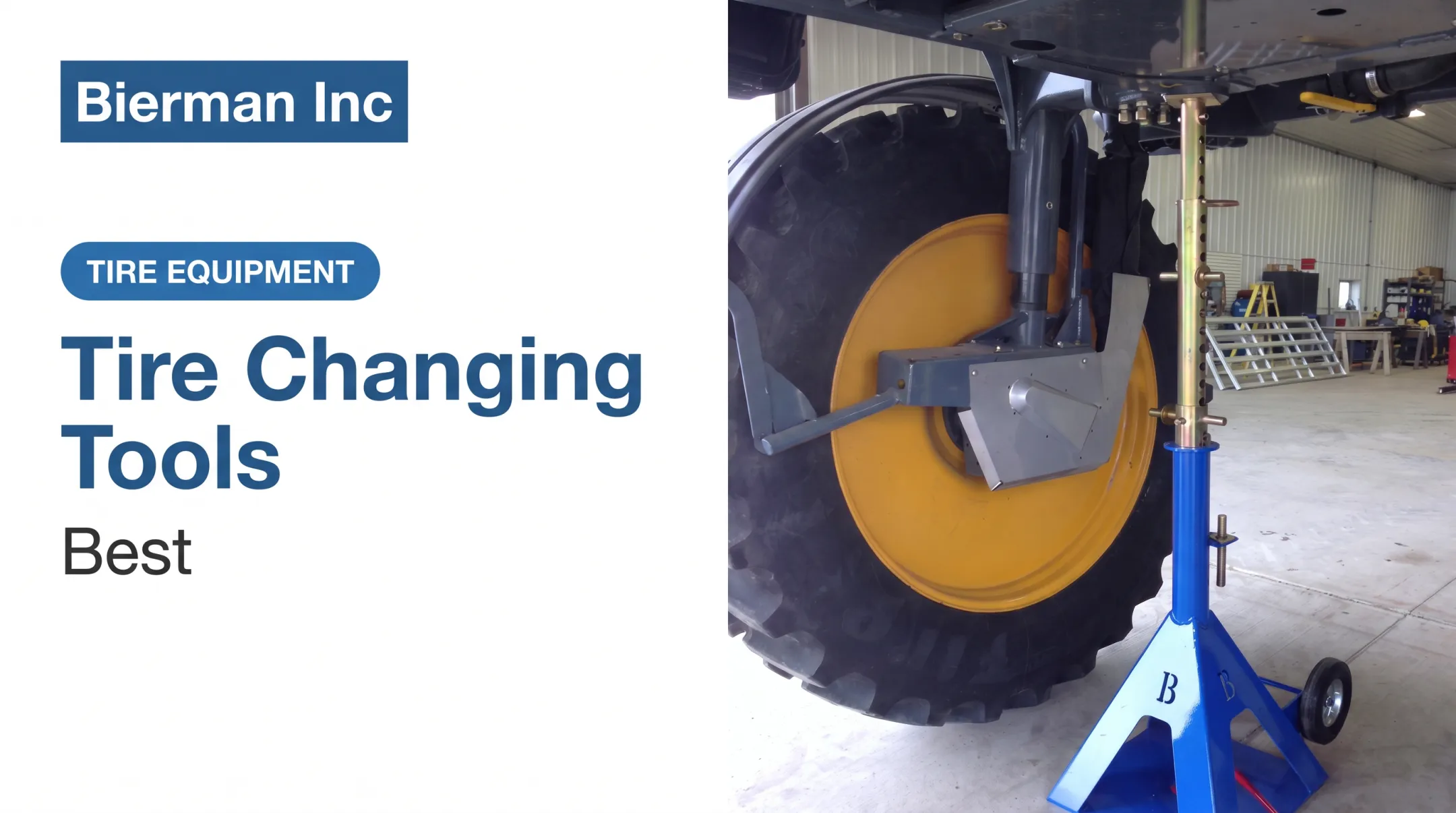
Bierman Inc's EZ Dual Changer fills that handling gap. The unit hangs from a chain hoist, front-end loader, forklift, or service truck boom, holds tires up to 32 inches wide, and lifts up to 3,000 pounds.
One person can rotate the wheel for lug-nut alignment. Farmers in Iowa and Minnesota use it for seasonal dual changes to cut the manual wrestling old-style methods require.
Pairing that with a properly rated storage rack — one designed for upright dual storage with enough clearance for the changer to work between the tires — closes the loop between storing wheels safely and handling them safely when it's time to swap them.

Reducing Manual Handling Reduces Risk
One mishandled dual change can mean a crushed hand, a strained back, or worse. Cutting manual lifting and improving wheel position during changes removes the slip-and-shift moments that turn into injuries.
Rated racks for storage, plus lifting aids for the swap, keep heavy assemblies controlled from the shelf to the hub.
Frequently Asked Questions
What is the best way to store tires long term?
Store them in a clean, cool, dry, shaded space away from ozone sources and chemicals. Prep, support, and label them correctly, inspect them periodically, and follow manufacturer guidance first.
How long can tires be stored before they go bad?
There's no universal number. Age, storage conditions, and tire condition all factor in, so check the DOT date code and have a qualified tire professional inspect anything stored for an extended period.
Is it a good idea to store tires in a storage unit?
It can work if the unit is clean, dry, temperature-controlled, and ventilated, with reasonable security and access. Avoid damp, hot, outdoor, or poorly ventilated units, and check the facility's rules on tire storage first.
Should tires be stored standing up or stacked?
It depends on whether the tire is mounted, its size and weight, and how long it'll sit. Unmounted tires generally do better standing upright; mounted assemblies can often be stacked or hung, per manufacturer recommendations.
How should mounted tires and wheels be stored?
Use load-rated racks built for the assembly's weight, with stable support and clear labeling. Move heavy wheels with rated lifting equipment, and never exceed the storage system's rated capacity.
What is the best tire storage system for a busy dealership or farm operation?
Assess your inventory volume, tire dimensions, retrieval frequency, and available space first. Then choose shelves, modular racks, mobile systems, carousels, or specialized wheel-handling equipment rated for your tire sizes and load.